
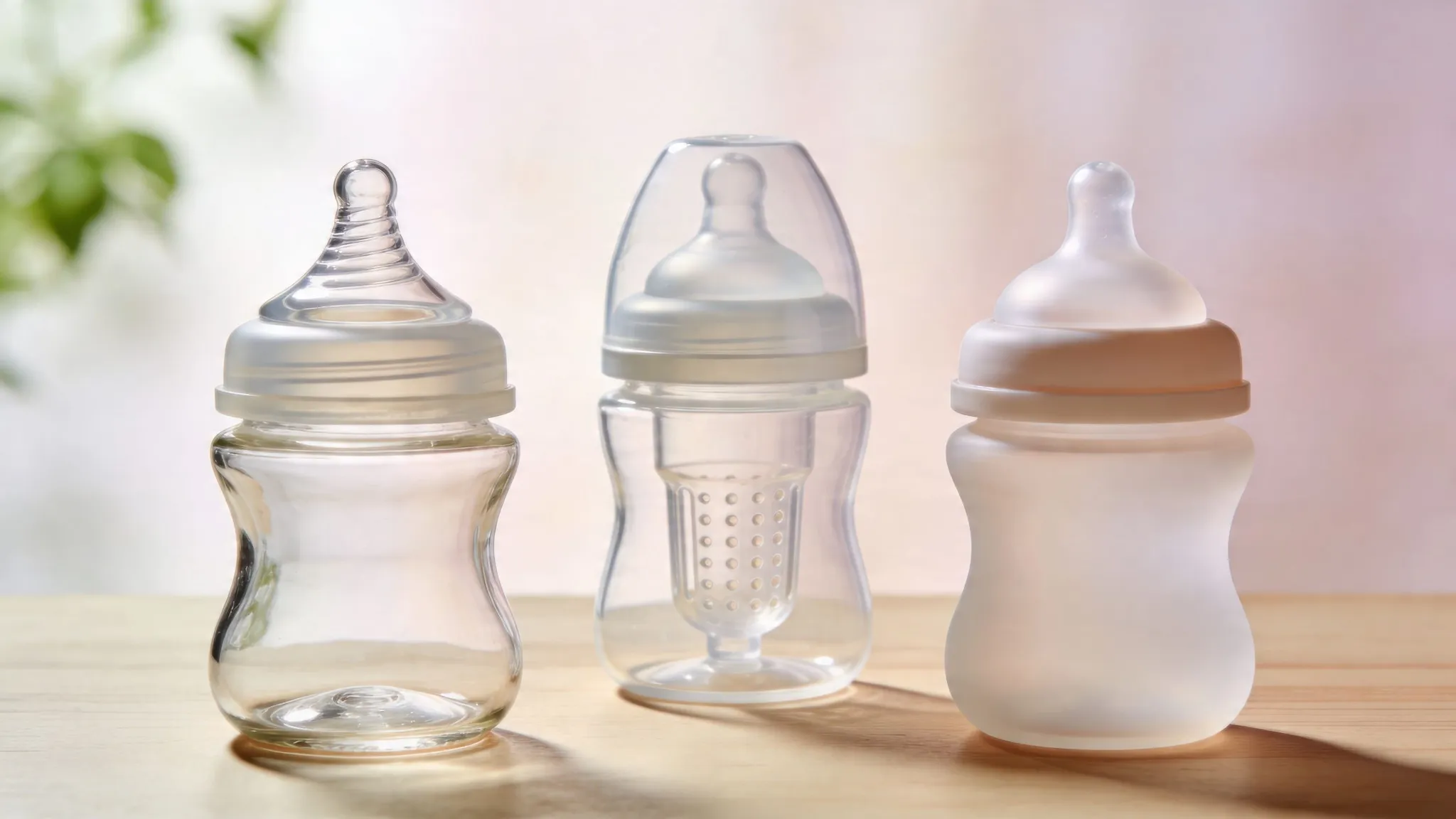
You’re probably here because breastfeeding is going well enough that you want a little flexibility, but not so well that you feel relaxed about changing anything. You might want your partner to do one evening feed. You might be planning for childcare or a return to work. Or you may want the option of leaving the house without watching the clock.
That’s the moment when bottle shopping gets oddly stressful.
Parents often tell me the same two worries sit side by side. They want a bottle that works, and they’re scared that the wrong one will lead to fussing at the breast, flow preference, shallow latch, or a baby who suddenly decides milk should always arrive faster and with less effort. Those concerns are valid. They also don’t mean you need the “perfect” bottle. You need a bottle that suits a breastfed baby’s latch, pace, and feeding pattern.
The best bottles for breastfed babies aren’t always the ones with the loudest packaging claims. In practice, what matters most is nipple shape, flow, venting, bottle size, cleanability, and how that bottle fits into your actual life in Australia. That last part gets skipped in many roundups. A bottle might look ideal online and still be annoying if it doesn’t work with your pump, is hard to replace locally, or requires fiddly parts at 2 am.
Navigating Your Bottle Feeding Journey
A common scenario looks like this. Baby is a few weeks old, breastfeeding is finally feeling less chaotic, and someone suggests introducing a bottle “just so they’ll take one.” Suddenly a simple purchase feels high stakes. Parents start comparing teats, anti-colic systems, and bottle shapes, then get overwhelmed because every brand claims to mimic the breast.
That confusion makes sense. Marketing tends to flatten a nuanced decision into a single promise. Real feeding doesn’t work that way.
One family may need a bottle that slows down a keen feeder who gulps and splutters. Another may need a shape that encourages a wider latch. Another may need something straightforward to pair with regular pumping. The right choice depends on the problem you’re trying to solve.
If you’re still learning your baby’s rhythm, it helps to look at feeding patterns first rather than shopping by hype. A simple guide to newborn feeding schedules and hunger cues can help you tell the difference between a baby who’s ready to feed, a baby who’s overtired, and a baby who’s already upset enough to reject anything unfamiliar.
Parents often blame the bottle when the real issue is timing. A calm, alert baby is much more likely to accept a new teat than a hungry, frustrated one.
The other point I reassure parents about is this. Bottle introduction is rarely a one-feed verdict. Some babies accept the first bottle with no fuss. Others need a few low-pressure attempts before it clicks. That doesn’t mean breastfeeding is doomed, and it doesn’t mean you chose badly. It usually means you’re still matching the bottle to your baby’s latch and temperament.
The Anatomy of a Breastfed Baby Friendly Bottle
A bottle can look beautifully designed and still be a poor match for a breastfed baby. What matters is how the teat behaves in the baby’s mouth, how quickly milk flows, and whether the bottle fits your day-to-day routine.

| Feature | What to look for | Why it matters |
|---|---|---|
| Nipple shape | Gradual slope, rounded form | Encourages a wider, deeper latch |
| Flow rate | Slow flow | Helps bottle feeding feel closer to breastfeeding pace |
| Bottle size | Smaller newborn size | Makes portions easier to judge |
| Venting | Effective but practical system | May reduce swallowed air |
| Cleaning | Parts you can manage daily | A “good” bottle that’s painful to clean often gets abandoned |
Nipple shape matters more than branding
The teat shape does much of the work. A gradual slope usually supports a wider mouth opening, which is closer to how babies feed at the breast. Teats with a sudden, narrow tip-to-base change can encourage a shallow latch, and that often leads to clicking, slipping, or gulping.
Parents in clinic often focus on whether a bottle is marketed as “breast-like.” I pay more attention to whether the baby can maintain a deep, comfortable latch without losing suction. That tells you more than the packaging does.
A smaller bottle size is often the most practical place to start for younger babies, especially if you are offering expressed breast milk and keeping feeds modest. For Australian parents, this also keeps things simpler if you are pumping with Medela or Spectra and transferring milk into storage bottles before feeding. Fewer oversized bottles end up sitting half-used in the cupboard.
Practical rule: If the teat encourages a narrow, pursed suck, it is less likely to support smooth switching between breast and bottle.
Slow flow usually protects breastfeeding better
A breastfed baby generally does best with a teat that asks them to work for milk. Slow flow helps them suck, pause, breathe, and swallow in a more organised pattern. That rhythm matters.
If milk comes too quickly, babies can start spluttering, leaking milk from the sides of the mouth, or finishing feeds before satiety cues catch up. Some then begin to prefer the bottle because it is easier and faster. Often, the issue is timing, not the bottle itself, but an overly fast teat can make that problem worse.
Labels are not reliable enough on their own. One brand’s slow flow can behave like another brand’s medium. Watch your baby. If feeds look rushed, noisy, or messy, the flow may be too fast even if the box says otherwise.
Material changes the daily workload
Material does not usually determine whether a baby accepts the bottle, but it absolutely affects convenience, sterilising, and how the bottle holds up over time.
- Polypropylene plastic is light, easy to find in Australia, and usually the least expensive starting point.
- PPSU suits families who sterilise frequently and want a tougher plastic that holds up well.
- Glass or glass-lined hybrid bottles are popular with parents who want easier stain resistance and a cleaner feel, but they are heavier.
- Silicone feels soft and flexible, which some parents like, though not every baby feeds well with a very compressible bottle.
There is no perfect material. The best one is the one you will still be happy washing at 2 am.
Venting helps some babies, but every extra part has a cost
Venting systems can reduce swallowed air for babies who gulp, click, or seem uncomfortable after feeds. They can be very helpful in the right situation. They also create more washing up.
That trade-off matters more than many buying guides admit. A bottle with multiple inserts, valves, or fiddly vents may work beautifully for one baby and still be unrealistic for a family doing six or eight feeds a day. If you are expressing regularly, this becomes even more relevant. Australian parents using Medela or Spectra pumps often do best with a setup that keeps pumping, milk transfer, and bottle prep straightforward rather than adding another complicated system to wash.
A bottle that reduces air intake but leaves you scrubbing tiny inserts every night may still be the wrong bottle for your household.
Ease of cleaning affects whether you will keep using it
Consistency helps babies learn a bottle. Consistency is much easier when the adults do not dread the cleanup.
Wide neck bottles are often easier to wash thoroughly by hand. Narrow bottles can still work well, but they are less forgiving if milk collects around threads, bases, or vent pieces. Drying time matters too. Parts that stay damp for hours become annoying very quickly.
This is also where local availability matters for Australian families. A bottle may test well overseas and still be a poor practical choice if replacement teats are hard to find at Chemist Warehouse, Baby Bunting, your local pharmacy, or online from Australian retailers. If you need a different flow rate next week, access matters just as much as design.
A Framework for Comparing Top Bottle Contenders
A useful bottle comparison starts with the feeding problem you are trying to solve. A baby who clicks, gulps, or spills milk needs a different bottle from a baby who refuses the teat. Parents who pump several times a day often need something else again. The best choice is usually the bottle that supports feeding well enough without creating extra work you will resent by day three.

If you are building a shortlist for your registry, keep it small. Two or three well-chosen options are usually more useful than a full matching set. You can see how other Australian families keep bottle choices flexible in these sample baby registry setups.
Quick comparison at a glance
| Bottle | Best fit | Main strength | Main trade-off |
|---|---|---|---|
| Dr. Brown’s Options+ narrow bottle | Babies with gas or frequent spit-up concerns | Strong venting system and narrow sloped design | More parts to clean |
| Pigeon PPSU Wide Neck | Babies needing an easier latch transition | Gradual taper that encourages a wider latch | Availability can vary |
| Chicco Duo Hybrid | Parents wanting a durable hybrid material | Glass-lined construction with plastic outer | Nipple shape may not suit every early breastfed baby |
| NUK Perfect Match Slow Flow | Newborns needing controlled flow | Slow-flow design and compression-style feeding feel | Some babies still need trial and adjustment |
| Gulicola and Lansinoh bottles | Families prioritising gentle flow and anti-colic features | Slow-flow design and venting focus | Brand access may differ by retailer |
For a natural latch
If preserving a deep latch at the breast is your main goal, teat shape deserves close attention.
The Pigeon PPSU Wide Neck is often a sensible starting point because the teat has a gradual taper rather than a short, abrupt tip. That shape tends to suit babies who already open widely at the breast and struggle with flatter or more protruding teats. In practice, it is often a better match for transition feeds than bulky teats marketed as “breast-like.”
I still would not call it universal. Some breastfed babies do better with a narrower teat than their parents expect, especially if they are organised feeders who latch efficiently and dislike a large teat in the mouth. The box only tells you so much. The baby makes the final decision.
This type of bottle is usually worth trying if:
- Your baby already takes a deep latch at the breast
- You are offering occasional bottles and want to protect that latch pattern
- You have noticed chewing, slipping, or shallow sucking on other teats
For reducing colic and swallowed air
Babies who gulp hard, come off coughing, or seem uncomfortable after feeds often need a bottle with better venting. That does not mean every unsettled baby needs the most engineered system on the shelf. It means air management should move higher up your priority list.
The Dr. Brown’s Options+ narrow bottle is a common choice for this reason. Its vented system is designed to reduce air intake during feeds, and the narrower sloped teat can suit babies who do not manage wide-neck teats well. The trade-off is straightforward. More parts mean more washing, more drying, and more chances to misplace something at 2 am.
The NUK Perfect Match Slow Flow can also work well here, especially for babies who cope better with a slower, more controlled suck pattern. It usually appeals to parents who want some air-control support without committing to the fiddliest bottle setup in the cupboard.
A bottle only helps if you can use it consistently. If a vent system feels too annoying to clean and reassemble, it stops being the right choice for your household.
For durability and heavy rotation
Some bottles hold up better than others under repeated sterilising, transport, and daily use. That matters more than branding if you are expressing often, sending bottles to childcare, or washing the same few bottles on repeat.
The Chicco Duo Hybrid stands out because it combines a glass inner surface with a plastic outer shell. For parents who like the idea of milk sitting against glass but do not want the weight and breakability of a traditional glass bottle, that is a practical middle ground. It often feels reassuring in the hand and copes well with frequent cleaning.
The caution here is simple. A durable bottle is not automatically the easiest bottle for a breastfed baby to accept. If latch transfer is your main concern, teat shape still matters more than bottle body material.
This option often suits families who:
- Pump regularly and reuse bottles heavily
- Want a bottle that feels sturdy without being fully glass
- Care about long-term wear as much as initial feeding performance
For a very slow pace
Some babies are not especially windy or fussy about shape. They just need the flow to slow down.
The NUK Perfect Match Slow Flow fits that brief well, particularly in the newborn stage when a faster teat can turn a calm feed into a messy one. A slower feed gives the baby more control and makes paced bottle feeding easier for the adult.
Gulicola and Lansinoh can also be worth considering if your current bottle seems too fast. Both are commonly chosen for gentler flow and anti-colic features. Availability and teat stock can vary, so they make more sense as a targeted trial than a bulk buy.
What usually works, and what tends to backfire
Across brands, a few patterns come up again and again in real feeding plans.
What usually helps:
- A gradual teat slope that supports a deeper latch
- A slow flow in the early months
- Bottle sizes that match the baby’s age and feed volume
- A venting system that solves a clear problem
- Testing one bottle before buying multiples
What often causes trouble:
- Choosing the bottle with the most convincing packaging
- Buying a large starter set before any trial feed
- Assuming wide-neck automatically means breastfed-baby friendly
- Moving to a faster teat because the feed feels slow to the adult
- Changing bottle type every day and expecting the baby to settle quickly
If parents ask me where to start, I usually suggest this order. Pick one bottle for latch, one for air management if that is an issue, and only then compare extras like materials or aesthetics. That approach saves money, reduces clutter, and gives you clearer answers faster.
Practical Considerations for Australian Parents
Many international bottle guides fall short by comparing brands as if every family shops from the same shelves and uses the same pump systems. Australian parents know that’s not how it works.
Some brands are easy to replace locally. Others appear in reviews constantly but are awkward to source, inconsistent in stock, or expensive once you start chasing extra teats and replacement parts. That matters more than people admit. Bottle feeding gets frustrating fast if you can’t reliably buy the teat your baby finally accepts.
Pump compatibility matters more than most reviews admit
For Australian families, pump compatibility deserves a place near the top of the checklist. Verified data notes that 68% of Australian breastfeeding mothers use electric pumps, and that many reviews still don’t test compatibility with dominant local pump brands such as Medela or Spectra. The same summary says a 2025 CHOICE Australia test found only 3 of 15 bottles scored over 80% for slow-flow consistency when used with Medela flanges, as reported in The Bump’s bottle roundup summary.
That means a bottle can be excellent on paper and still annoy you in daily use if it doesn’t pair neatly with your expression setup.
Here’s the practical consideration:
- Direct-fit convenience: If a bottle attaches directly to your pump system, you reduce transfers, spills, and washing.
- Adaptor dependence: Some combinations work, but only with adaptors. That’s manageable if you’re organised, but irritating if you’re expressing several times a day.
- Flow after pumping: A bottle that fits the pump but has a faster-than-expected teat may still undermine your mixed feeding plan.
If you’re building a shortlist before baby arrives, it can help to save likely options in one place so you can compare bottles, pumps, and accessories side by side. A sample of how parents organise those choices is available through EasyRegistry sample registries.
Availability and replacement parts
A bottle is only as useful as your ability to replace the teat your baby likes. Before committing, check whether the brand is easy to find through major Australian baby retailers, pharmacies, or reliable online sellers.
I usually suggest parents ask three questions before buying a full set:
- Can I buy replacement teats locally without much hassle?
- If this bottle works, can I get the same teat in the next stage when needed?
- If I lose a vent or cap, can I replace that part without replacing the whole system?
Those questions sound mundane. They save a lot of grief.
Buy for your routine, not an idealised one
A family who mostly breastfeeds and gives one occasional bottle may tolerate a more complicated anti-colic design. A family who pumps daily often needs a bottle that’s efficient, easy to wash, and easy to pair with storage and expression routines.
That’s the Australian reality many generic guides miss. The best bottles for breastfed babies aren’t just about latch theory. They also need to fit your pump, your shops, and your week.
Introducing the Bottle and Troubleshooting Rejection
The first bottle feed usually goes best when nobody treats it like a test. If the adults are tense, the baby often is too.

The first bottle feed
Start when your baby is calm, awake, and interested in feeding, but not desperate. A baby who is already very hungry is more likely to get upset by any change in flow, smell, or holding position.
If possible, let someone other than the breastfeeding parent offer the first few bottles. Many babies can smell milk and protest because they know the breast is nearby. A different caregiver removes that negotiation.
Keep the baby semi-upright. Hold the bottle fairly level, not tipped vertically so milk rushes into the teat. Let the baby draw the teat in rather than pushing it in quickly. Pause during the feed. Switch sides halfway through if that helps keep the experience balanced and paced.
Feeding cue: Bottle feeding works best when the pace stays with the baby, not the adult.
If baby chews the teat
Chewing usually means the baby hasn’t figured out how to latch onto that teat shape, or the flow isn’t matching what they expect.
Try these adjustments:
- Touch the teat to the lips first and wait for a wider mouth opening.
- Check the shape. Some babies do better with a more gradual slope.
- Warm the teat slightly under warm water so it feels less starkly different from the breast.
- Slow the environment down. A baby who’s overstimulated often fusses with the teat instead of organising a good suck.
If baby drinks, then fusses halfway through
This often points to pace, air intake, or frustration with the flow.
A few things to try:
- Pause more often and give brief burp breaks.
- Keep the bottle more horizontal so milk doesn’t pour too fast.
- Check the venting system and make sure it’s assembled correctly.
- Watch swallowing. If the baby is gulping, coughing, or leaking milk, the teat may be too fast.
This demonstration can help if you want to see paced technique in action:
<iframe src="https://www.youtube.com/embed/ThW_0qB7OIg" allow="accelerometer; autoplay; clipboard-write; encrypted-media; gyroscope; picture-in-picture" allowfullscreen></iframe>
If baby refuses outright
Refusal feels personal. It usually isn’t.
Some babies need a different context before they’ll accept a bottle. Try offering it at a different time of day, in a different room, or while walking gently rather than sitting in the usual breastfeeding spot. Some babies take a bottle more easily when they’re a little sleepy. Others prefer being fully alert.
You can also experiment with temperature. Some babies accept expressed milk more readily when it’s closer to body temperature. Others care less about the milk and more about the teat texture or shape.
If refusal continues, don’t keep forcing the issue in a prolonged battle. Stop, reset, and try again later. Repeated pressure can make the bottle itself feel unpleasant.
If the bottle works but breastfeeding changes
This is the moment to slow down and look at feeding technique before blaming the concept of bottles altogether. Keep bottle feeds paced. Use the slowest workable teat. Avoid letting feeds become very fast and easy compared with the breast.
If you notice breast fussing, shallow latch, or sudden impatience at the breast, the bottle may be flowing more quickly than you realised. Often, a small adjustment in teat choice or feeding pace solves the problem.
Building Your Baby Registry with EasyRegistry
Registry planning is where bottle advice often gets expensive. Parents read one glowing review, add a full boxed set, and end up with six bottles their baby doesn’t like. That’s not a feeding problem. It’s a shopping strategy problem.
The smartest registry plan for bottles is simple. Add a small test selection, not a bulk commitment.

What to put on your registry first
If you’re expecting to combine breastfeeding with pumped milk, shortlist two or three bottle styles that solve different problems. For example, one may be your latch-friendly option, one your anti-colic option, and one your easy-clean option.
Then add:
- One or two single bottles of each candidate rather than one large multi-pack
- Extra slow-flow teats for the bottle that ends up working best
- A bottle brush that matches the shape and size of your chosen bottle
- A drying rack that can handle small parts without losing them
- A sterilising solution that suits your kitchen and routine
This approach keeps your gifts useful and reduces waste.
Add the supporting items that make bottle feeding easier
Parents often focus so hard on the bottle that they forget the accessories that make the whole system manageable. If you’re expressing, think in systems. How will milk be pumped, stored, warmed, fed, and cleaned up afterward?
You may also want a few comfort-focused postpartum and baby care items on the same list. If you’re curating a more thoughtful care section, this guide to luxury baby and maternal skincare products can help you choose items that feel practical and giftable rather than decorative.
Build for testing, then scale up
Once your baby clearly prefers one bottle, then it makes sense to build out the rest of that system. Until then, flexibility is worth more than quantity.
For parents creating a dedicated list before the baby shower, the easiest place to organise bottles, feeding accessories, and the rest of your newborn essentials is an EasyRegistry baby shower registry. The key is keeping the registry adaptable so you can change course once your baby shows a preference.
Don’t register for a warehouse of one bottle style. Register for a smart trial run.
Frequently Asked Questions About Bottle Feeding
How should I clean and sterilise baby bottles?
Wash bottles and teats promptly after feeds so milk residue doesn’t sit in seams or vents. Use hot soapy water and a brush that reaches the inside corners and teat base properly. If your bottle has valves or inserts, take them apart fully each time according to the manufacturer’s instructions.
Sterilising matters most when equipment is new and in the early feeding period, or any time your clinician has advised extra caution. The safest routine is the one you’ll do thoroughly and consistently.
What’s the safest way to warm expressed breast milk for a bottle?
Warm the milk gently rather than overheating it. A bowl or jug of warm water works well, as does a bottle warmer used carefully according to instructions. Swirl the bottle to distribute warmth evenly.
Avoid guessing based on the bottle’s outer feel alone. Test a small drop on the inside of your wrist. It should feel lukewarm, not hot.
When should I move up to a faster flow teat?
Move up only if your baby is consistently showing that the current teat is too slow, not because of age alone. Signs can include prolonged frustration during bottle feeds despite good latch, strong sucking with very little transfer, or repeatedly collapsing the teat while remaining hungry.
Don’t size up just because someone says your baby “should” be ready. Many breastfed babies do well on a slow flow for quite a while.
What if my baby never takes a bottle well?
Some babies never love bottles, and that doesn’t mean you’ve failed. It may mean the teat shape isn’t right, the timing hasn’t been ideal, or your baby strongly prefers other feeding methods. If bottle feeding is essential and repeated attempts are stressful, personalised help from a lactation consultant or feeding professional is worth getting.
If you’re also sorting out shower gifts and feeding gear questions at the same time, the EasyRegistry FAQ page is useful for the registry side of planning.
If you’re preparing for a baby shower or setting up a practical gift list, EasyRegistry makes it easy to organise bottles, feeding accessories, and newborn essentials in one place. It’s a simple way to avoid duplicates, keep your shortlist flexible, and build a registry around what your family will use.