
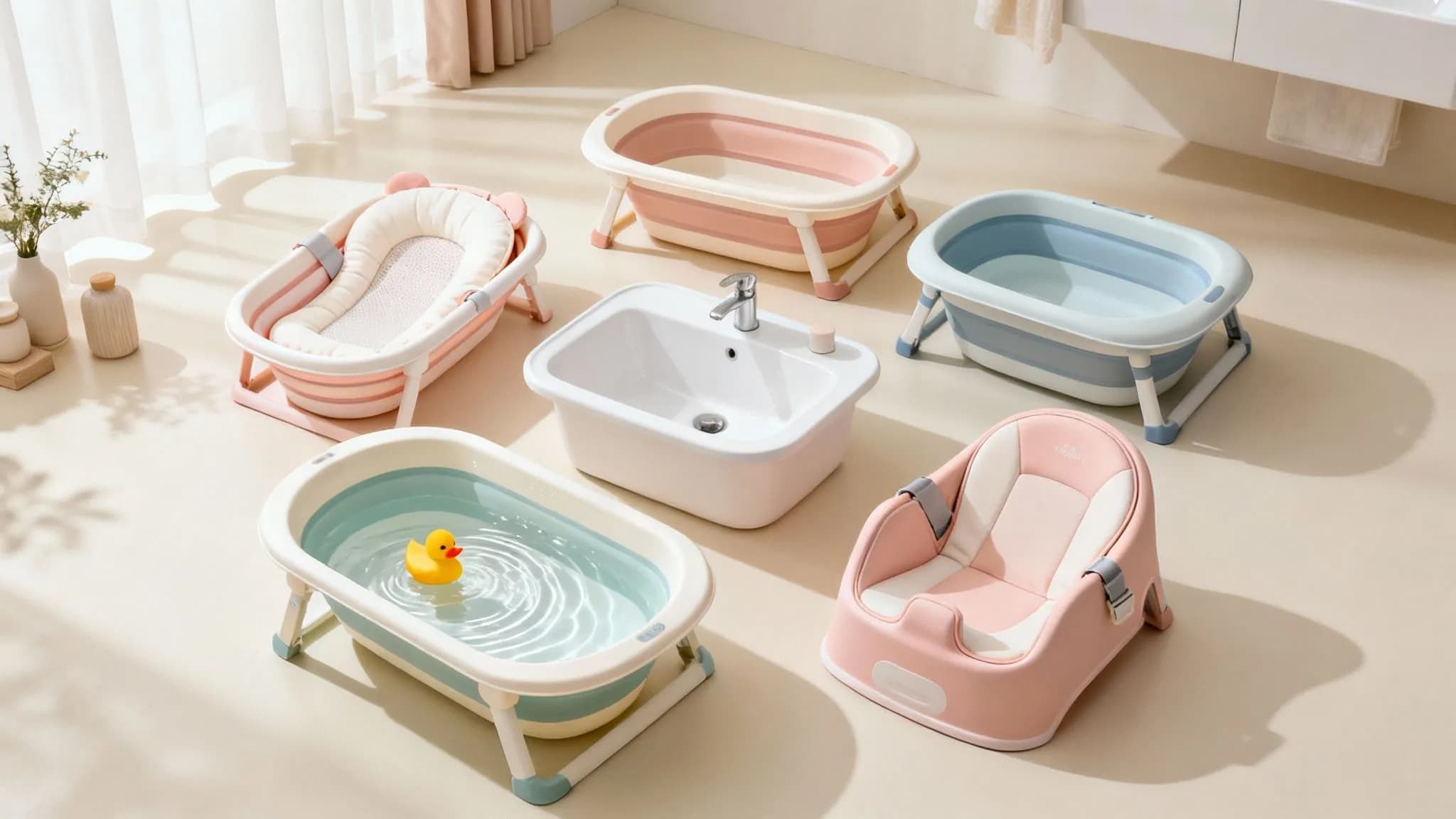
Picking the right baby bath tub really boils down to three things: safety, your own convenience, and how long you want to be able to use it. Some of the most popular tubs are convertible ones that grow with your little one, while clever designs like collapsible or sink-insert tubs are a lifesaver for small spaces. The goal is to make bath time a safe, fun bonding experience right from the very beginning.
Why The Right Baby Bath Tub Is A Game-Changer
Choosing a baby bath tub is one of those decisions that feels small but actually makes a huge difference to your daily routine. A purpose-built tub is designed to support a slippery, wriggly baby in a way your big bath or kitchen sink just can't. It creates a secure space that can turn what might feel like a daunting task into a lovely, calming ritual for you both.
Here in Australia, infant safety is a huge focus. It's no surprise that 45% of the baby bath market is geared towards the newborn stage (0-6 months). In fact, tubs with certified non-slip surfaces have been shown to cut down on slipping incidents by an incredible 70% in home tests.
A good tub also saves your back! Hunching over the side of a full-sized bath every night is a recipe for aches and pains. An elevated stand or a simple sink insert can make all the difference. As you start putting together your wish list, think about how the tub fits in with all your other best baby registry items.
What To Look For Before You Buy
To find your perfect match, it helps to know what’s out there. Each type of tub is designed with a different lifestyle, home, and baby stage in mind.
| Tub Feature | Why It Matters | Who It's Best For... |
|---|---|---|
| Newborn Support | This is all about cradling their head and neck before they have the strength to do it themselves. | Absolutely essential for parents with babies aged 0-6 months. |
| Space-Saving Design | Think collapsible tubs or ones that fold flat. Perfect for stashing away when not in use. | Anyone living in an apartment or just short on storage space. |
| Longevity (Convertible) | These tubs adapt as your baby grows, taking them from the newborn recline to a toddler splash zone. | A smart choice if you're on a budget and want one product to last. |
| Material Safety | Always look for BPA-free, non-toxic materials. It’s a non-negotiable for your baby's health. | Every single parent. This is a must-have safety standard. |
At the end of the day, the best baby bath tub is the one that fits seamlessly into your life. Once you understand these key differences, it becomes much easier to narrow down the choices. If you need a little inspiration for organising everything, have a look at these great sample baby registries.
Understanding The Different Types Of Baby Bath Tubs
When you start shopping for a baby bath tub, it can feel like you’re wading through endless options. But really, it boils down to a few main types, each designed for a specific purpose, home, and stage of your baby’s life. Figuring out which one is right for you is all about matching the tub's design to your space and your baby's needs.
The main thing to remember is that you want something that offers the right support for your baby's age and also fits comfortably into your daily routine. Let's walk through the most common styles you'll find on the shelves.
Newborn Inserts And Slings
In those early, wobbly-headed days, newborn inserts are your best friend. These aren't tubs on their own; think of them as supportive seats or soft, hammock-like slings that you place inside your regular bath or a large kitchen sink. Their entire job is to cradle your newborn safely, keeping their head well above the water so you have both hands free for washing.
They’re perfect for babies from birth up to about six months, or right until they’ve mastered sitting up on their own. They offer a gentle, secure introduction to the water and are particularly useful for those first sponge baths before the umbilical cord stump has healed.
- Best for: Parents who want total peace of mind with head and neck support for their newborn (0-6 months).
- Ideal scenario: You want to use your existing large bath or sink without buying a separate, bulky tub.
Collapsible And Foldable Tubs
If you're living in an apartment or any home where "storage space" is more of a wish than a reality, collapsible tubs are a game-changer. These are cleverly designed with flexible materials that let them squish down almost completely flat. It means you can easily slide one into a cupboard or hang it on the back of the bathroom door.
Don't let their slim profile fool you; when opened up, they're a sturdy, secure basin ready for splash time. Many also come with handy features like non-slip surfaces and built-in hooks for easy drying.
Key Insight: Collapsible tubs give you all the features of a standard baby bath but disappear when you don't need them. This makes them a top pick for anyone trying to maximise their living space.
Sink And Basin Tubs
Sink tubs are shaped to fit snugly right inside your kitchen or bathroom sink. This brings bath time up to a much more comfortable height for you. No more kneeling on a cold, hard tile floor or hunching over the big tub—a real back-saver, especially during postpartum recovery.
These tubs are typically compact, creating a cosy and secure space for little ones. They’re often contoured to support a baby’s body and have non-slip bases to keep them firmly in place.
Convertible Tubs: The Grow-With-Me Solution
If you’re looking for bang for your buck, you can’t go past a convertible tub. These are the multi-taskers of the baby bath world, designed to adapt as your child grows from a tiny, reclined newborn to a sitting infant and, eventually, a splashing toddler. They manage this with removable slings, adjustable inserts, and different seating positions.
They do tend to be a bit larger and bulkier than other types, but their longevity makes them a very cost-effective choice. You buy one tub and you're set for up to two years or more, which saves you from having to upgrade every few months.
To make things a little clearer, here's a quick comparison of the main options.
Quick Guide To Baby Bath Tub Types
This table breaks down the key categories to help you quickly see which type might be the best fit for your family's needs.
| Tub Type | Ideal Age Range | Primary Benefit | Best Use Case Scenario |
|---|---|---|---|
| Newborn Insert | 0-6 Months | Maximum head/neck support | Using your existing bath or sink safely |
| Collapsible Tub | 0-18+ Months | Space-saving storage | Apartments or homes with limited space |
| Sink/Basin Tub | 0-6 Months | Ergonomic for parents | Avoiding bending and kneeling |
| Convertible Tub | 0-24+ Months | Long-term value and versatility | Parents wanting a single solution |
Getting a handle on these basic differences is the first step. With this groundwork laid, you can start digging into the specific features that will make every bath a safe, comfortable, and happy experience for everyone involved.
Digging Into the Details: Key Baby Bath Tub Features
Once you've got a rough idea of the type of tub you need, it's time to zoom in on the specific features. This is where the real differences lie—the little details that turn a simple plastic tub into a safe, comfortable, and genuinely helpful piece of baby gear. We're moving past the broad categories to dissect what really matters in the day-to-day chaos of bath time.
Understanding these features is all about context. What works wonders for a parent in a small apartment might be totally unnecessary for someone with a spacious bathroom. It's about matching the tub's design to your home, your baby's age, and what will give you the most peace of mind.
This handy infographic gives a quick visual summary of the main tub styles we’ve covered, highlighting what each one is built for.
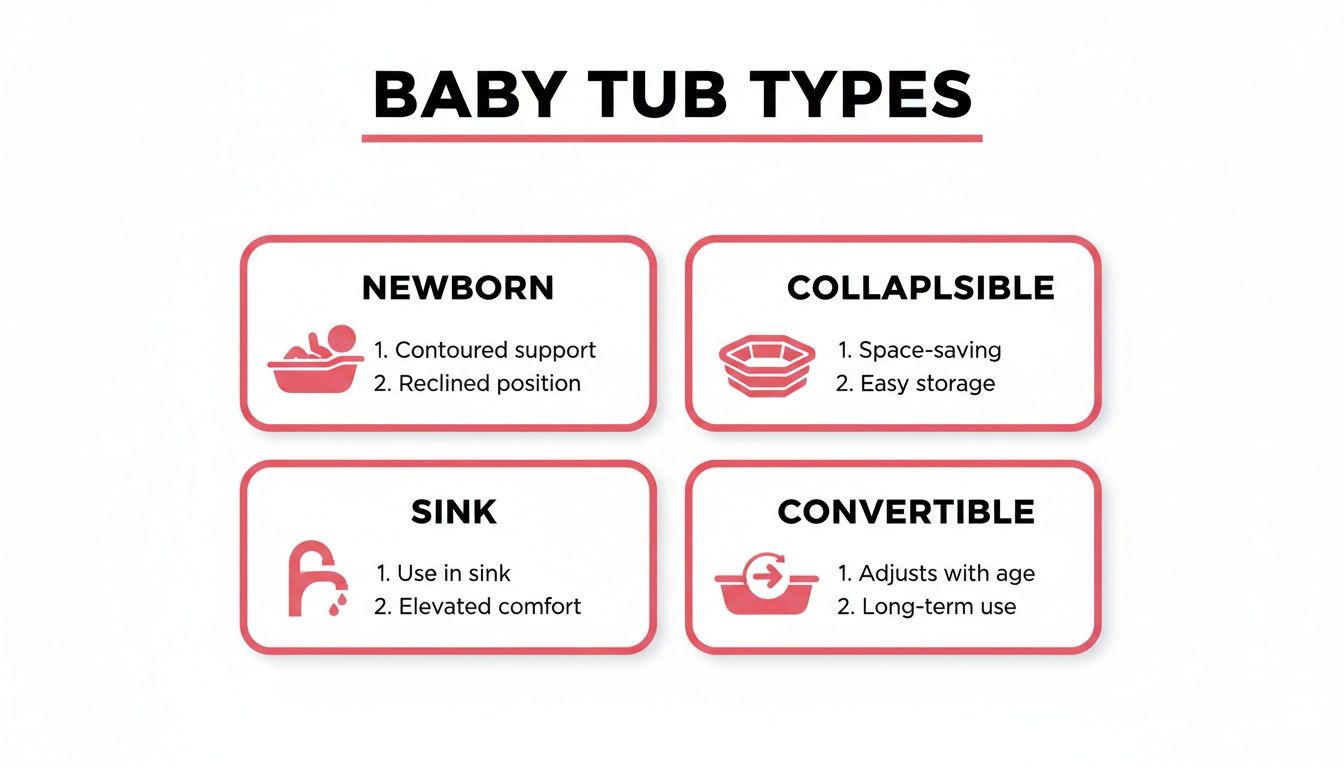
Think of each icon as a tailored solution, whether your priority is supporting a tiny newborn, saving precious space, or finding something that will grow with your child.
Feature Comparison Across Baby Bath Tub Types
To make sense of it all, here’s a quick-glance table comparing how the different tub types stack up against the most important features.
| Feature | Newborn Insert | Collapsible Tub | Convertible Tub | Travel Tub |
|---|---|---|---|---|
| Safety | High (cradles baby) | Good (non-slip base) | Excellent (multi-stage support) | Moderate (varies) |
| Materials | Mesh, Fabric, Plastic | Silicone, TPE, PP | PP, TPE | PVC, Inflatable Vinyl |
| Age Suitability | 0–6 months | 0–18 months | 0–24+ months | 6–24 months |
| Cleaning | Easy (often machine washable) | Good (fewer crevices) | Good (can be bulky) | Moderate (can have seams) |
| Portability | Excellent | Excellent | Poor (large size) | Best-in-class |
| Price Tier | $ | $$ | $$$ | $ |
This comparison highlights the trade-offs. For example, a convertible tub offers amazing long-term value and safety but scores low on portability, while a travel tub is the exact opposite.
The Non-Negotiables: Must-Have Safety Features
Let’s be clear: safety is everything. A slippery baby, a slick surface, and a tub full of water is a recipe for anxiety. The right safety features are your first and best defence against any potential mishaps.
First on the list is a non-slip surface. This isn't just marketing fluff; it's a critical design element. Some tubs feature a subtly moulded texture right into the plastic, while others use grippy silicone or rubberised panels to keep your little one in place. It’s this friction that stops them from sliding around, especially once they start getting wiggly and trying to sit up.
Just as important is a stable, sturdy base. The tub needs to sit perfectly flat, with no rocking or tipping, whether it's in the family bath, on the kitchen floor, or nestled in the sink. Look for models with rubberised feet or a wide footprint that can withstand an accidental bump from a curious older sibling.
Expert Insight: A tub's safety isn't about one single feature; it's a complete system. You need a reliable non-slip interior working together with a rock-solid base to create a secure environment for a worry-free bath.
Why Temperature Indicators are a Game-Changer
Getting the water temperature just right is a constant worry for new parents. Water that feels perfectly fine to an adult can be far too hot for a baby’s delicate skin. This is where a built-in temperature indicator becomes an incredibly helpful tool.
You'll usually find them in two forms:
- Heat-sensitive drain plugs that cleverly change colour if the water is too hot.
- Digital thermometer displays that give you an exact temperature reading at a glance.
The data backs up their value. After a concerning rise in bath-related injuries, regulatory bodies tightened AS/NZS standards, which helped filter out many non-compliant imports. National statistics show tubs with built-in thermometers, now used by 72% of parents in Sydney, have contributed to a 35% drop in scalding incidents over the last decade. You can read the full research about these safety trends for more details.
Materials Matter More Than You Think
The material a baby bath tub is made from has a direct impact on its safety, longevity, and how easy it is to keep clean. The most crucial label you should be looking for is BPA-free. Bisphenol A (BPA) is a chemical that can be found in some plastics, so choosing products free from it has become a standard precaution for all baby gear.
Beyond being non-toxic, the material needs to be tough enough for daily use and cleaning without cracking or wearing out. High-quality polypropylene (PP) and thermoplastic elastomer (TPE) are popular choices for a reason—they offer a great balance of sturdiness and flexibility.
Hygiene is the other side of the coin. Look for tubs designed with anti-mould properties or made from smooth, non-porous materials. Tubs with fewer nooks and crannies are a blessing, as they prevent the build-up of yucky soap scum and mildew. A clean tub is a healthy tub.
Clever Design and Convenience Features
While safety and materials are the top priorities, it’s the smart design features that can make a huge difference to your daily routine. A simple, effective drainage system is one of those details you'll be thankful for every single night.
A well-placed drain plug means you don't have to lift and tip a tub full of heavy water. It’s a real back-saver and prevents messy spills all over the bathroom floor. Just make sure the plug is easy for you to open but secure enough that a curious baby can’t pull it out mid-bath.
Ease of cleaning is another massive factor.
- Smooth Contours: Tubs with rounded edges and seamless interiors are a breeze to wipe down.
- Removable Parts: Look for slings and inserts that are machine-washable or made from quick-drying mesh.
- Integrated Hooks: Many tubs now come with a built-in hook for hanging them to dry, which is brilliant for air circulation and keeping mildew at bay.
The best tubs find that perfect sweet spot between all these elements. A tub might be super safe, but if it's a pain to clean and store, it will quickly become a source of frustration. The goal is to find a product that excels on the safety front while also making your life just a little bit easier.
Which Bath Tub Is Right For Your Family?
<iframe src="https://www.youtube.com/embed/bTC6bsk1zik" allow="accelerometer; autoplay; clipboard-write; encrypted-media; gyroscope; picture-in-picture" allowfullscreen></iframe>
Choosing the "best" baby bath tub isn't about finding a single perfect product. It’s about finding the one that seamlessly fits into your world—your home, your routine, and your priorities as a parent.
What works for a family with a huge bathroom in a suburban house could be a nightmare for someone in a small city apartment. To help you find the right fit, let's look at a few common scenarios. See which one sounds most like you, and you’ll be able to narrow down the options and find a tub that makes bath time a breeze.
For The Urban Apartment Dweller
When you live in a smaller space, every single item needs to earn its keep. Bulky baby gear is the enemy, and storage is everything. If this is you, the best baby bath tub is one that can practically vanish when you’re done with it.
Your best bets are collapsible and sink tubs.
- Collapsible Tubs: These are the transformers of the baby bath world. They give you a sturdy, full-sized tub for splashing around, but then fold almost completely flat. You can slide one into a tiny gap beside the washing machine or hang it on the back of a door. Easy.
- Sink Tubs: These clever inserts use the sink you already have, saving you from needing a big plastic tub cluttering up the floor. They’re compact, bring your baby up to a comfortable height (saving your back), and can be stashed under the sink when bath time is over.
So, which one to choose? It really depends on your sink and what you find more comfortable. If you’ve got a big, deep kitchen sink, an insert can be an ergonomic lifesaver. If your sink is on the smaller side, a collapsible tub gives you more flexibility to bathe your baby on the floor or inside your main bathtub.
For The Budget-Conscious Parent
Babies come with a surprisingly long shopping list, so making smart financial choices is a huge help. When it comes to bath tubs, the most budget-friendly option isn't just the cheapest one on the shelf—it's the one that gives you the most value over time. This is where convertible tubs are brilliant.
Sure, a simple newborn basin might cost less at the checkout, but your baby will outgrow it in just a few months. Then you’re back to the shops to buy another one. A convertible tub, on the other hand, is designed to grow with your child, usually covering three key stages:
- Newborn: A comfy mesh sling or moulded insert keeps them securely reclined.
- Infant: Once they have some head control, you can remove the sling to let them sit up with support.
- Toddler: The open basin gives a confident toddler plenty of room to sit and play.
The Smart Investment: A convertible tub might have a slightly higher price tag initially, but it can easily last for two years or more. You're buying one product that does the job of three, saving you the money and hassle of upgrading down the line.
For The Safety-First Family
For many new parents, nothing is more important than peace of mind. If your absolute top priority is creating the safest possible bath time, then you’ll want a tub engineered with extra safety features built right in. These are the designs that go the extra mile to minimise risk and offer that little bit of extra reassurance.
For this, your best choice is often a high-quality convertible tub with integrated safety technology. These models typically come with superior non-slip surfaces and cleverly designed inserts that keep your baby in the perfect position at every stage.
Keep an eye out for handy features like a digital thermometer that gives you a precise water temperature reading, or a heat-sensitive drain plug that changes colour if the water gets too hot. These little details take the guesswork out of bath time and help prevent accidental burns. A top-tier tub is a fantastic item to add to your gift list, as it’s something friends and family will feel great about contributing to. You can easily add one to your online baby shower registry to make sure you get the one you really want.
Keeping Your Baby Bath Tub Clean and Safe
A baby bath tub gets a lot of use, and all that water, soap, and skin cells can quickly turn it into a breeding ground for mould and bacteria if you're not careful. The good news is that a simple, consistent cleaning routine is all it takes to keep the tub hygienic and make sure it lasts. After all, a clean tub means a safe, healthy bath for your little one.
Proper care isn't just a quick rinse. It’s about being thorough with cleaning, making sure it dries completely, and giving it a quick once-over now and then to spot any problems before they start. These small habits protect your investment and, more importantly, your baby’s sensitive skin.
Your Daily and Weekly Cleaning Routine
When it comes to preventing grime, consistency is everything. A quick daily wipe-down combined with a more thorough weekly clean will keep your tub in perfect shape.
After Every Single Bath:
- Drain it Fast: Empty all the water out immediately. Standing water is mildew’s best friend.
- Rinse and Repeat: Use warm water to wash away every last bit of soap scum and bubbles. That leftover film is what bacteria loves to cling to.
- Quick Wipe: Grab a soft, clean cloth and give the inside a quick wipe. This gets rid of any stubborn residue and helps it dry faster.
- Air it Out: This is the most important step. Don't just leave the tub sitting flat in your main bath. If it has a hook, hang it up. Otherwise, stand it on its side or flip it upside down over the edge of the bath so air can circulate freely and dry it completely.
Once a week, it’s time for a deeper clean. Mix up a simple, non-toxic cleaning solution using equal parts white vinegar and water. Use a soft brush or cloth to scrub all the surfaces, paying extra attention to the drain plug, any little crevices, and the non-slip mat where germs love to hide. Give it a final, thorough rinse with fresh water, and you're done.
Special Care for Different Tub Types
Not all tubs are the same, and some need a bit of extra TLC. Collapsible tubs have folds and creases, while fabric slings and foam inserts have their own unique cleaning needs.
- Collapsible Tubs: When you're cleaning, make sure you pop the tub all the way open to get into every single fold. After rinsing, it's crucial to let all those creases dry out completely before you collapse it for storage. Trapping even a little moisture in there is a recipe for mould.
- Fabric Slings: The great thing about most mesh or fabric slings is that they can go right in the washing machine. Just check the manufacturer’s tag, and pop it on a gentle cycle once a week. Always hang it to air dry properly before putting it back on the tub.
- Foam Inserts: Foam is like a sponge, so make sure you squeeze all the water out after each bath. Give it a good clean with your vinegar solution from time to time and let it air dry somewhere with good ventilation.
A clean tub is the foundation of a healthy bath time. It also helps to use gentle products, like a natural baby shampoo and body wash, that are designed for your baby's delicate skin.
Getting Ahead of Common Problems
A little bit of prevention goes a long way. Keep an eye on the drain plug to make sure it’s still forming a tight seal—over time, they can wear out. Check for any leaks and clear away any gunk that builds up around the seal.
If you ever spot discolouration or stubborn spots that just won't budge with your regular cleaning, it could be a sign of mould staining. That's a clear signal that it's time to replace the tub. By sticking to this simple routine, you can make sure your baby’s bath tub stays safe and sparkling clean for every splash.
Common Questions About Baby Bath Tubs
Jumping into the world of baby gear can feel a bit overwhelming, and picking the right bath tub is no exception. It’s something you’ll be using almost every day, so you want to get it right. To help you feel confident in your choice, we’ve answered some of the most common questions Australian parents ask.
Getting the details sorted—from timing that very first bath to understanding safety and cleaning—can make the whole experience so much smoother and more enjoyable for both you and your little one.
When Is It Safe To Start Using A Baby Bath Tub?
You can usually give your baby their first proper bath once their umbilical cord stump has fallen off and the area has healed completely. This typically happens in the first one to two weeks.
Before then, gentle sponge baths are the way to go. Once you’re ready for that first real dip, it’s crucial to use a tub designed for newborns. These have features like a moulded incline or a soft fabric sling to provide the full head and neck support they need.
What Are The Most Important Safety Features To Look For?
Safety always comes first, and a few features are non-negotiable. The most critical is a non-slip surface inside the tub to stop your baby from sliding around once things get wet and wriggly.
Just as important is a sturdy, stable base that won't tip, even if it gets an accidental nudge. For newborns, that built-in support is a must-have to keep their head safely above the water at all times.
Key Safety Takeaway: Always look for tubs made from BPA-free, non-toxic materials. A built-in temperature indicator is another fantastic feature—it takes the guesswork out of getting the water temperature just right and helps prevent accidental scalds.
How Do I Properly Clean And Disinfect A Baby Bath Tub?
Keeping the tub hygienic is vital for your baby’s health, and thankfully, a simple routine is all you need. A quick clean-up can prevent the build-up of mould and mildew.
After each bath, give the tub a quick rinse with hot water and wipe it down with a clean cloth. The most important step is to let it air dry completely, so hang it up or stand it on its side to get good air circulation.
For a weekly deep clean, use a solution of equal parts white vinegar and water to scrub all the surfaces. Make sure to get into any little nooks and crannies, especially around the drain plug. Rinse it well and let it dry completely before using it again.
How Long Can My Child Use A Convertible Bath Tub?
Convertible tubs are a really popular choice, and for good reason—they offer fantastic long-term value. These clever designs grow with your child, often lasting from the newborn stage right up to two years old or a weight limit of around 11-13 kg.
They manage this with smart, adaptable features:
- Newborn Stage: A soft mesh sling or a contoured insert gives tiny babies full-body support.
- Infant Stage: Once your baby has good head control, you can remove the sling, letting them sit in a reclined or supported upright position.
- Toddler Stage: The open tub then gives a confident sitter plenty of room to splash and play.
Always check the manufacturer's guidelines to make sure you're using the tub correctly for your child's age and stage. Many parents find these to be a brilliant investment. If you’re putting a gift list together, you can search for baby registries online to explore different models and read reviews.
Can I Use A Baby Bath Tub In The Shower?
Yes, absolutely! Using a baby bath tub in a walk-in shower can be a great space-saving solution. The trick is to ensure the tub has a wide, stable, non-slip base that sits securely on the shower floor without any chance of wobbling.
This setup works especially well with compact, standalone tubs. It means you can sit comfortably on a shower stool or kneel just outside, which is often a lot easier on your back. Just make sure the tub is placed away from the direct spray of the showerhead so you can control the water flow and temperature yourself.
At EasyRegistry, we make it simple to create a beautiful, personalised registry for your baby shower. Add the perfect bath tub and all your other essentials in one convenient place for friends and family. Get started with your free baby registry today!