
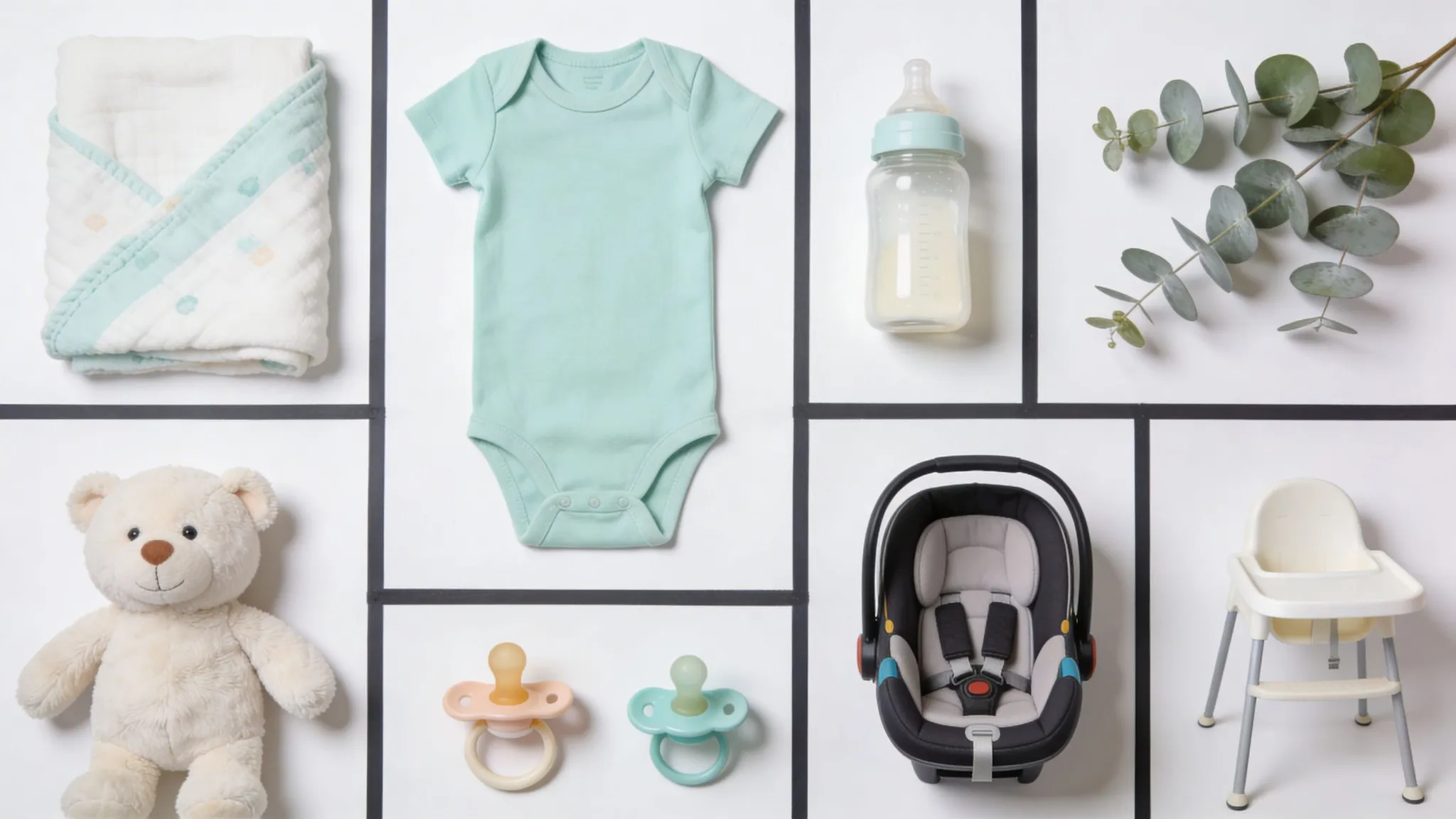
You’re probably staring at tabs full of prams, cots, bottles, carriers, nappies, swaddles, pumps, monitors, and twenty different versions of the same thing, wondering how any parent is meant to sort the useful from the nonsense.
That feeling is normal. Baby shopping in Australia can get out of hand fast because shops, social media, and well-meaning friends all push more gear than most families need. The trick isn’t buying everything. It’s choosing the few items that are safe, practical, and worth having in your home from day one.
My view is simple. Start with safety. Add the daily basics. Leave room for your baby’s preferences, because some things you won’t know until they arrive. And build your registry around real life, not a styled nursery photo.
Feeling Overwhelmed by Baby Gear? Start Here
Walk into a baby store when you’re pregnant and everything suddenly sounds urgent. The cot has to be perfect. The pram has to last for years. Every bottle claims to solve feeding issues. Every sleep product promises longer nights. Most of it just creates noise.
Start smaller. Ask one question: what does my baby need in the first week home? Not in six months. Not for a picture-perfect nursery. Just in those first tired, messy, beautiful days.
For most Australian parents, the answer boils down to a safe place to sleep, a compliant car seat, enough clothes for constant changes, feeding basics, and nappy supplies. Everything else sits lower on the list.
Baby showers have become a much bigger part of preparing for a baby here. In Australia, 78% of new mothers reported they held or attended one in recent years, up 45% from 2010, and 85% of registries include critical safety items according to baby product statistics covering Australian baby shower and registry trends. That matters because a good registry isn’t just a wish list. It’s a filter.
Use a decision rule
When you’re unsure about an item, sort it into one of these buckets:
- Must have: You’ll need it immediately or very soon after birth.
- Nice to have: Helpful, but you can wait and see.
- Skip for now: Looks useful, but you don’t yet know if your baby or home setup will suit it.
That one habit stops panic buying.
Keep your list boring on purpose
The best registry is usually the least exciting one. It has breast pads, muslins, fitted sheets, wipes, singlets, and a proper thermometer. It doesn’t blow half the budget on trendy gear before you’ve covered basics.
Practical rule: If an item doesn’t help with sleep, feeding, transport, nappy changes, bathing, or safety, it probably isn’t a first-round purchase.
If you’re organising gifts, one list also makes life easier for everyone else. Friends and family want direction. They don’t want to guess whether you need another bunny rug or the bassinet sheets you forgot to buy. If you need help with setup details, the EasyRegistry FAQs answer the common practical questions quickly.
The Newborn Checklist What You Need (0-3 Months)
Newborns need less gear than marketing suggests. They need frequent feeds, clean nappies, a safe sleep space, weather-appropriate clothing, and parents who aren’t scrambling for basics at 10 pm.
I’d buy for the first three months only. Babies grow fast, and your preferences will change once real life starts.
Start with five categories
Think in daily routines, not shops:
- Sleep: where baby sleeps, and what keeps that setup simple
- Feeding: whether you’re breastfeeding, bottle feeding, or both
- Nappy changes: enough supplies in the right spots
- Clothing: easy layers, not complicated outfits
- Bath and health: basic care items, nothing fancy
Newborn Must-Haves Checklist (0-3 Months)
| Category | Item | Recommended Quantity | Reason |
|---|---|---|---|
| Sleep | Bassinet or cot | 1 | Safe place for sleep from the first night |
| Sleep | Firm mattress that fits properly | 1 | A proper fit matters for safe sleep |
| Sleep | Fitted sheets | 3 | One on the bed, one in the wash, one spare |
| Sleep | Lightweight swaddles or zip swaddles | 3 to 5 | Helpful for settling and frequent laundry |
| Sleep | Baby sleeping bags for later transition | 2 | Useful once swaddling no longer suits |
| Feeding | Newborn bottles | 4 to 6 | Enough for mixed feeding or bottle feeding without constant washing |
| Feeding | Bottle brush | 1 | Keep bottle cleaning separate and simple |
| Feeding | Burp cloths or muslins | 8 to 12 | You’ll use these all day |
| Feeding | Bibs | 4 to 6 | Handy once spit-up ramps up |
| Feeding | Breast pump if needed | 1 | Useful if you’re expressing, mixed feeding, or building flexibility |
| Feeding | Breast pads | 1 pack | Often needed early, even if you’re not sure yet |
| Nappy changing | Newborn or size 1 nappies | 1 small stockpile | Enough to get started without overcommitting to one brand |
| Nappy changing | Baby wipes or cotton pads | 1 starting stockpile | Daily essential |
| Nappy changing | Barrier cream | 1 | Good to have before you need it |
| Nappy changing | Changing mat | 1 | Makes changes easier on any surface |
| Nappy changing | Nappy caddy or basket | 1 to 2 | Keeps essentials in reach, especially in a two-storey home |
| Clothing | Onesies or bodysuits | 6 to 8 | Frequent spills and nappy leaks |
| Clothing | Zip suits | 6 to 8 | Easier than snaps during night changes |
| Clothing | Singlets | 4 to 6 | Good layering in cooler weather |
| Clothing | Socks or booties | 3 to 4 pairs | Useful if baby runs cool |
| Clothing | Beanies | 2 | Handy for outings and cooler days |
| Bath and health | Soft towels | 2 to 3 | Enough rotation for early baths |
| Bath and health | Washcloths | 4 to 6 | Gentle and practical |
| Bath and health | Baby wash | 1 | Keep it simple and mild |
| Bath and health | Baby bath or bath support | 1 | Optional for some families, but easier for many |
| Bath and health | Digital thermometer | 1 | Buy it before you need it |
| Bath and health | Nasal aspirator | 1 | Small item, big help when baby is congested |
What to buy less of
Don’t load up on newborn-size clothes. Don’t buy heaps of one bottle brand before you know what your baby likes. Don’t fill drawers with blankets, shoes, or elaborate outfits.
The other thing I’d avoid is buying too many “problem-solving” gadgets before a problem exists. If your baby ends up needing reflux-specific bottles, a different swaddle, or extra feeding support, you can buy those later.
What’s worth having in two spots
If your home has more than one main living area, duplicate a few cheap basics:
- Nappy supplies: wipes, nappies, cream
- Muslins: keep them everywhere
- A spare change of clothes: for baby and for you
- A portable change mat: saves your back and your couch
Buy the expensive items carefully. Buy the cheap daily items in enough quantity to stay sane.
That’s the balance.
Understanding Australian Baby Safety Standards
I'm firm on this point. Some baby purchases are flexible. Safety items are not. In Australia, compliance matters more than aesthetics, influencer reviews, or whether a product is popular overseas.
If a product protects your baby in a car, during sleep, or in daily transport, check the standard first and the colour second.
Car seats are not the place to improvise
In Australia, infant car seats must comply with AS/NZS 1754:2013. Compliant seats reduce infant mortality risk by 78% in frontal crashes, and 28% of parents are unaware of recall histories according to the cited guidance in this newborn baby essentials checklist discussing Australian-compliant car seats.
That should change how you shop.
A seat can look clean, expensive, and barely used, and still be the wrong choice if you can’t verify its history. I’m cautious with secondhand car seats for exactly that reason. If you can’t confirm the model, recall status, instructions, and full crash history, walk away.

What to check before you buy
For high-risk gear, use a short checklist.
- Look for the standard label: For car seats, check for AS/NZS 1754 compliance on the product itself, not just the box copy online.
- Ask about recalls: Search the ACCC Product Safety Australia recall database before you buy, especially if it’s secondhand.
- Check instructions are included: Missing manuals increase installation mistakes.
- Inspect all parts: Harnesses, buckles, clips, mattress supports, brakes, and locking points should all be present and working.
- Skip vague listings: If a seller can’t answer basic questions, don’t gamble.
- Prioritise correct installation: A compliant product installed badly can still be dangerous.
The same rule applies to cots. You want a cot that meets the relevant Australian standard, with a firm mattress that fits properly and no extra padding, loungers, or loose bedding added in.
A safe sleep space should look plain. That’s a good sign, not a missing feature.
The gear I’d treat as essential
Some items deserve extra scrutiny every single time:
Car seat
Buy new if your budget allows. If you buy secondhand, verify everything. No exceptions.
Cot or bassinet
Check compliance labelling, mattress fit, and overall condition. Don’t use makeshift mattress toppers or padding to “improve” comfort.
Pram or stroller
Test the brakes, harness, folding mechanism, and stability. If it feels flimsy in store, it won’t feel better with a nappy bag hanging off the handle.
Toys for young babies
Avoid anything with small detachable parts, loose decorations, or unclear age suitability.
Questions to ask a retailer or seller
You don’t need to sound technical. Just ask directly.
- What standard does this comply with?
- Has this model had any recalls?
- Can I see the compliance label?
- Is the instruction manual included?
- Has any part been replaced?
- For a car seat, has it ever been in an accident?
If the answers are fuzzy, move on.
Safety beats convenience every time
Parents often get sold convenience first. Rotating features, fancy fabrics, compact folds, sleep add-ons, designer finishes. Some of that is useful. None of it matters if the product isn’t compliant and fit for purpose in Australia.
The safest baby must haves are often the least glamorous. A plain compliant cot. A correctly installed restraint. A sturdy pram with a proper harness. That’s the gear worth your money.
Essentials for Your Growing Baby (3-12 Months)
By three months, your baby starts changing fast. They’re more alert, more mobile, and a lot more interested in the world around them. This is the stage where your registry or shopping list should shift from pure survival to support for movement, play, and solids.

What changes after the newborn phase
You won’t need a completely new setup. You’ll just add a few items that match development.
A good play mat becomes more useful once baby starts rolling and spending more awake time on the floor. A sturdy high chair matters when solids begin. Bibs get messier. Storage gets more important because small toys somehow multiply overnight.
I’d also start thinking ahead about baby-proofing before you think you need it. Don’t wait until the first proper roll, crawl, or attempt to pull up on furniture. By then you’re reacting, not preparing.
The next round of practical baby must haves
Here’s what tends to earn its keep in this stage:
- High chair: Choose one that’s easy to wipe down. If it has too many creases, crumbs will live there forever.
- Silicone bibs and soft spoons: Easier for early solids and easier to clean.
- Suction bowls or plates: Not essential on day one, but useful once grabbing starts.
- Play mat: A large, easy-clean floor space gets used constantly.
- Simple toys: Rattles, stacking cups, soft books, teething toys, and basic cause-and-effect toys are enough.
- Baby gate: Worth buying before full crawling.
- Power point covers and cupboard latches: Not exciting, but necessary.
- A bigger sleep bag or next-size clothing: Babies outgrow gear before you expect.
Buy for the stage you’re entering, not the whole year
A common mistake is buying too far ahead. You don’t need a toy mountain for a five-month-old. You don’t need toddler feeding gear for a baby who hasn’t started solids. Buy what suits the next season of your life.
That’s also why I like adding later-stage items to a registry rather than rushing to purchase them all before birth. It gives friends and family useful options after the newborn essentials are covered.
Here’s a helpful visual if you want a quick reset on what babies use as they grow:
<iframe src="https://www.youtube.com/embed/N5FG57CmqmM" allow="accelerometer; autoplay; clipboard-write; encrypted-media; gyroscope; picture-in-picture" allowfullscreen></iframe>
Keep play simple
Babies don’t need a lounge room full of flashing plastic to develop well. They need safe floor time, a few interesting objects, and your attention.
Some of the best baby gear is the gear that gives your child room to move and gives you less to tidy.
That applies to this whole stage. Useful beats impressive.
Budgeting for Baby A Guide to Needs Wants and Savings
Baby costs add up quickly, and pretending otherwise helps no one. The average baby setup in Australia is AU$5,200, up 12% year over year, and 55% of Australian baby shower guests prefer contributing to cash funds over buying physical items, according to this piece on newborn essentials and baby setup costs.
My opinion is blunt. If money matters, and for most families it does, stop treating every baby purchase as a one-time emotional decision. Treat it like household planning.
Split everything into needs and wants
This works better than setting a vague budget.
| Needs | Wants |
|---|---|
| Car seat | Designer nappy bag |
| Safe sleep space | Matching nursery décor |
| Nappies and wipes | Multiple swaddles “just in case” beyond a sensible amount |
| Basic clothing | Special occasion outfits |
| Feeding supplies | Extra gadgets before a feeding issue exists |
| Thermometer and basic care items | Trend-driven accessories |
A want isn’t bad. It just shouldn’t push a need off the list.
Where to save without making life harder
Some baby categories are good places to be frugal. Others aren’t.
- Buy secondhand for low-risk items: Clothing, books, nursery drawers, and some toys are often great pre-loved buys if they’re clean and in good condition.
- Be stricter on safety gear: As covered earlier, high-risk gear needs proper verification.
- Accept hand-me-downs selectively: Say yes to the useful things that suit your home. Say no to clutter.
- Buy small amounts first: Especially with nappies, bottles, and swaddles.
- Use cash funds for big-ticket needs: This is far more practical than receiving five blankets and no car seat contribution.
If you’re trying to build better habits before the baby arrives, this guide on saving money as a family is worth reading because it focuses on everyday systems, not guilt.
Use your registry as a budget tool
In this context, a registry becomes more than a gift list. It becomes a plan.
Instead of listing only products, include a mix of:
- Core items: the things you need before birth
- Delayed purchases: solids gear, baby gates, bigger clothing
- Cash contributions: for larger essentials or flexible spending after birth
- Notes: mention preferred colours, sizes, or why an item matters
That last part matters more than people realise. Guests are usually happy to help when the request is clear and specific.
If you want one place to combine physical items and funds, the EasyRegistry features page shows how that setup works in practice.
A budget-friendly mindset that helps
Don’t aim for the cheapest possible baby setup. Aim for the setup that avoids waste.
That means:
- Spend properly on safety.
- Keep daily basics stocked.
- Delay uncertain purchases.
- Use gifts to fill genuine gaps, not duplicate impulse buys.
That approach cuts stress because it keeps you from buying the same category twice. Once before the baby, then again after you realise the first version wasn’t right.
Building Your Perfect Baby Registry with EasyRegistry
A useful registry should answer one question for your guests: what do you need?
That’s it. Not what looks cute. Not what someone else bought for their cousin. What your household will use.

Build your list in layers
Don’t create one giant undifferentiated list. Break it up mentally.
Layer one
Your immediate essentials. Car seat, sleep setup, nappies, wipes, basic clothes, feeding supplies.
Layer two
Helpful items that make the first months smoother. Extra sheets, muslins, bath basics, carrier, thermometer.
Layer three
Later-stage gear. High chair, feeding bibs, gates, play mat, simple toys.
This stops your list from becoming random.
Add products from different shops
Australian parents rarely buy everything from one retailer. That’s normal. One shop has the cot you want, another has the bottles, another has the nappy caddy, and your local marketplace might have a secondhand dresser.
That’s why it helps to use a registry system that lets you pull everything into one link rather than sending guests all over the internet. If you want a broad starting point for ideas, this essential baby registry checklist is a useful reference to compare against your own real priorities.
Use cash funds properly
Cash funds work best when they’re specific. Don’t just write “baby fund”.
Write things like:
- Infant car seat contribution
- Post-birth essentials top-up
- Nappies and wipes fund
- Feeding support fund
- Pram contribution
That gives guests context. It also makes the gift feel concrete, which people appreciate.
Write notes like a normal person
You don’t need polished registry copy. Just be clear.
Good examples:
- We’d love help with our car seat, as this is one of our key safety purchases.
- We’re keeping clothing simple, so practical zip suits and bodysuits are most useful.
- We’d happy with pre-loved books in good condition.
- We’d prefer fewer toys and more help with daily basics.
Those notes stop duplicate gifting and save awkward follow-up later.
Keep the list tidy and current
A registry only works if it reflects what you still need. Remove items you’ve bought yourself. Mark priorities clearly. If your plans change, update the notes.
For a simple walkthrough of how online registry setup works, from creating the list to sharing one link with guests, use how EasyRegistry works.
One practical point matters most. Don’t pad your registry to make it look full. A short, useful registry beats a long one stuffed with filler every time.
Guests want to give something that helps. Your job is to make that easy.
Welcome Your Baby with Confidence and Joy
The point of preparing for a baby isn’t to own every product marketed to new parents. It’s to create a home that’s safe, functional, and calm enough for you to settle into life with your child.
If you remember three things, remember these. Buy the essentials first. Take Australian safety standards seriously. Use your budget on what you’ll use every day. That alone will put you in a far better position than chasing every trend.
You also don’t need to do all of this in one weekend. Build your list gradually. Check the safety details properly. Leave room for hand-me-downs, thoughtful gifts, and remember that some purchases make more sense after the baby arrives.
Group gifting has shifted how many parents handle big purchases. For baby must haves, 70% of Australian baby showers now feature group-funded items via platforms like EasyRegistry, and user feedback suggests this can reduce duplicate gifts by up to 40%, as noted earlier in the Australian baby shower data. That’s a sensible move because it keeps the focus on what families need.
You’re not trying to win baby prep. You’re trying to make those first months easier.
That’s enough. More than enough.
If you want one place to organise physical gifts, larger contributions, and a single shareable list for family and friends, EasyRegistry is a practical way to keep your baby registry clear, useful, and easier to manage.